



Each March, Nutrition & Hydration Week reminds us that good care begins with good nourishment. For those working in care homes and supported living environments, food and drink are more than basic needs – they are fundamental to dignity, recovery, mood and quality of life.
Yet despite rising awareness, malnutrition remains one of the care sector’s biggest and most costly challenges. Addressing it requires practical change – rethinking not just what we serve, but how we serve it.
The Scale of the Problem
Malnutrition costs England an estimated £20 billion each year, with nearly half that spent on people over 65. Up to one in three individuals entering a care home is at risk of malnutrition, leading to poorer outcomes and higher healthcare costs.
Research also shows that as much as 80% of prescribed oral nutritional supplements (ONS) are discarded, often because residents find them unpalatable or artificial tasting. This not only wastes money – but it also means vulnerable people are missing out on essential nutrients that could support recovery and prevent decline.
Why Traditional Solutions Fall Short
Care professionals know the barriers well:
- Many fortified drinks and ONS products are synthetic-tasting or overly sweet.
- Residents with reduced appetite, swallowing difficulties, or altered taste due to illness or medication often reject these products.
- Staff shortages and rigid mealtime schedules can limit opportunities to encourage and monitor intake.
- The emotional and sensory aspects of eating – smell, texture, comfort, and familiarity – are rarely considered in nutritional interventions.
To truly tackle malnutrition, the sector needs solutions that integrate clinical efficacy with genuine enjoyment.
Bridging the Gap Between Medicine and Mealtime
That’s where My Doctor’s Recipe -a UK-based nutritional healthcare brand to help reimagine how nutrition is delivered in care settings so that it is both effective and enjoyable.
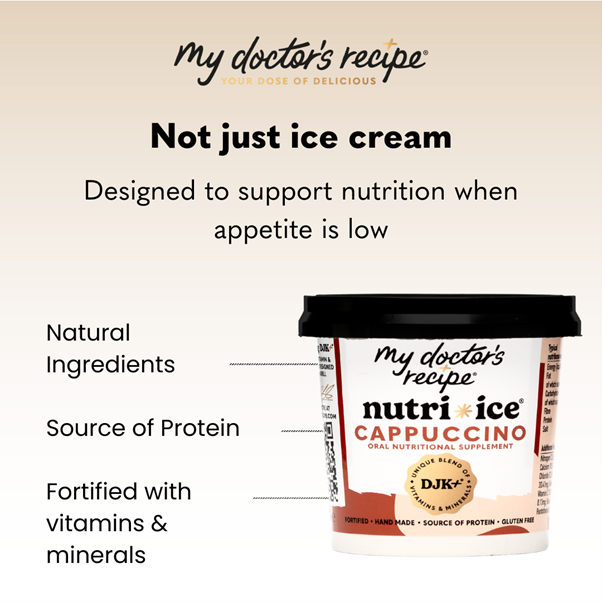
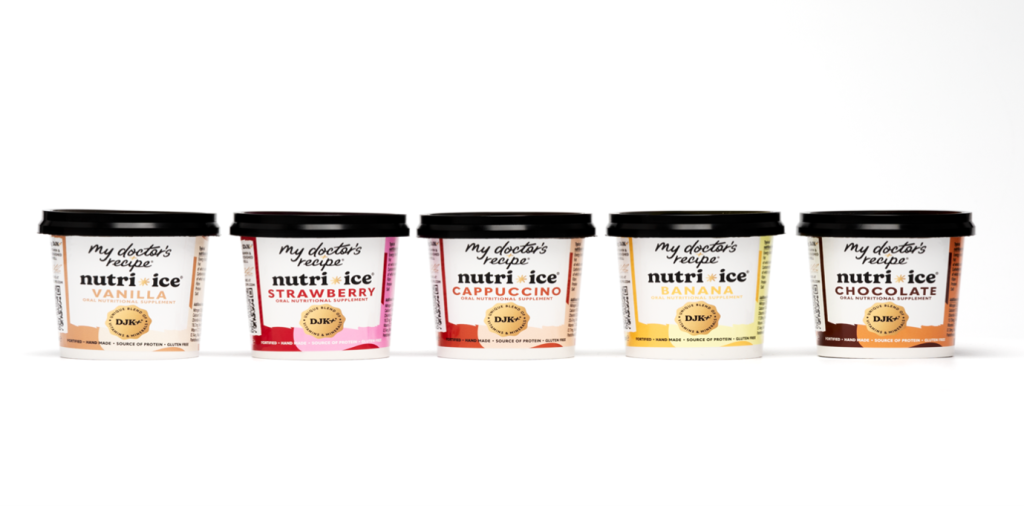
Our company’s core innovation, Nutri‑Ice®, is a fortified, handcrafted ice cream designed for individuals at risk of malnutrition – including older adults, those recovering from illness, and patients struggling with appetite loss or difficulty swallowing.
Each 100 g portion provides:
- 10 g of high-quality protein
- Over 30% of daily essential vitamins and minerals
- 300 calories, helping maintain healthy weight and energy
- Natural ingredients only – no artificial colours, flavours, or emulsifiers
What makes it clinically significant is its patented DJK+® encapsulated vitamin blend, which releases nutrients at the optimal point in digestion, improving absorption while keeping flavour unaffected. We also have Nutri-Scoop® which is our take on traditional ice cream, with the familiar taste and texture many people love with added nutritional benefits of DJK+ formular, natural ingredients, no artificial colours, flavours or preservatives but with refined sugar instead of the date syrup used in Nutri-Ice®
Real-World Impact in Care Settings
 In collaborative trials, My Doctor’s Recipe has helped care teams achieve noticeable improvements in nutritional intake and compliance among residents who previously refused standard ONS drinks. By offering a familiar, comforting food format – ice cream – care teams could provide targeted nutrition without resistance.
Key outcomes observed include:
- Reduced supplement waste, cutting both costs and environmental impact.
- Improved weight maintenance among residents with historically poor intake.
- Enhanced mood and engagement at mealtimes, particularly for individuals living with dementia.
- Greater confidence among catering and care staff in meeting nutritional goals.
Dr Jon Krell, co‑founder and Medical Director:
“Tackling malnutrition requires more than nutrients -it requires joy. Our mission is to make medically informed nutrition something people look forward to, not endure.”
Building a Culture of Nutrition in Care
Beyond innovative products, sustained improvement depends on building a stronger food and hydration culture within care homes. Managers and catering teams can lead this by:
- Auditing risk early – use screening tools such as MUST to identify residents most at risk.
- Offering flexibility and choice – smaller, more frequent portions; and texture-modified versions of favourites.
- Training staff – empower carers to recognise early signs of malnutrition or dehydration and respond effectively.
- Involving residents and families – menu planning that reflects cultural comfort foods and seasonal preferences.
- Celebrating successes – share achievements from Nutrition & Hydration Week throughout the year.
When menus are joyful and inclusive, nutrition naturally improves.
 Cost-Effective, Enjoyable, Sustainable
 Cost-Effective, Enjoyable, Sustainable
The economic argument is clear. If the care sector continues to rely on poorly accepted supplements that are largely discarded, we will keep losing billions each year while residents remain undernourished.
Innovations like Nutri‑Ice® demonstrate how clinically designed food can provide a cost‑effective alternative – not by increasing prescription budgets, but by reducing waste and improving outcomes.
“Having products which are both enjoyed and help combat malnutrition is vital for promoting health and wellbeing for the most vulnerable in our sector.” Care England.
Looking Ahead
Nutrition and Hydration Week is a reminder that transformation begins with collaboration. Clinicians, chefs, carers, and catering teams all play a role in rethinking how food can heal.
When clinical rigour meets culinary craft, everyone benefits – the resident, the staff, and the wider health system.
For further information, contact My Doctor’s Recipe at:
Ana Frappell: ana@mydoctorsrecipe.com

Comments
Login/Register to leave a comment