


Authors:
Arielle Rostant, Education and Research Lead, Nightingale Hammerson
Dr Zena Aldridge, NIHR Nursing and Midwifery Associate Director for Social Care
Nuno Santos Lopes, Director of Research and Innovation, Nightingale Hammerson
In recent years, research activity within care homes has increased, yet much of it continues to be designed and led by academics rather than by those who deliver or receive care1. While research for practice, where academics generate evidence to inform decision-making, remains essential, there is an equally, or perhaps even more important need for research with practice and research by practice. When those embedded in the care environment initiate ideas, collaborate in research design, and shape the direction of inquiry, the resulting knowledge is richer, more relevant and more readily translated into improved care.
Developing research capability within social care offers clear benefits. It can strengthen staff confidence in using and assessing research, supports professional identity, enhances recruitment and retention, and improves job satisfaction2. Ultimately, these gains contribute to better outcomes for people who rely on care and support. Despite this, research is still not routinely prioritised across the sector3. Nightingale Hammerson is one organisation that has chosen to take a proactive approach, recognising the value of increased research literacy and meaningful engagement with evidence generation.
Nightingale Hammerson is a charitable organisation supporting a diverse community of older people across its two London care homes. Residents have a wide range of needs including residential and nursing care, dementia, respite, rehabilitation and palliative care. The community is supported by more than 450 team members and over 100 volunteers. Those living and working within the homes possess extensive experience and insight. This knowledge that is vital to shaping effective, compassionate care.
Acknowledging that residents and staff are experts by experience, the organisation made a deliberate decision to embed research as an organisational priority. Care homes are environments rich in reflection, learning and practical wisdom, yet too often research is introduced by external teams with predetermined topics or methods that do not reflect daily realities. These experiences strengthened Nightingale Hammerson’s resolve to ensure that research conducted in the homes would be shaped with them, rather than simply carried out in them.
 As this shift took place, the team became increasingly confident in articulating their priorities to researchers and in ensuring that studies addressed questions that mattered to those living and working within the home. They formed partnerships with academics who valued residents’ and team members’ expertise, recognised their capacity to contribute to research design, and supported them to take active roles in research leadership.
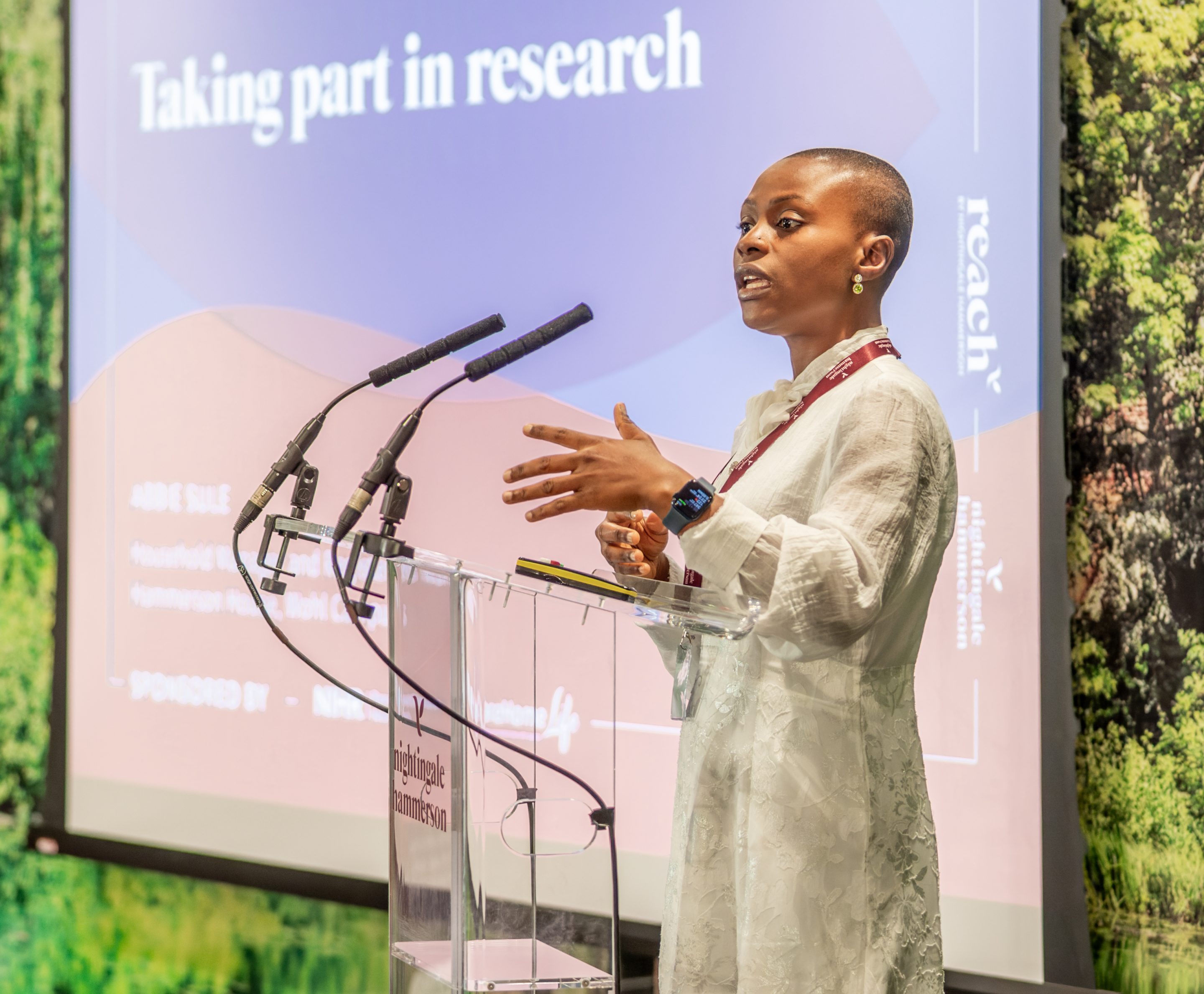
Building on this internal momentum, the organisation sought to create a platform that could extend this approach more widely. In 2021, it launched the Care Home Research Forum at the organisation’s North London home, Hammerson House, Wohl Campus. The first event was modest, a room of masked attendees in a newly reopened home, but its intention was bold: to create a space where research was presented, discussed and challenged by a genuinely diverse audience, including residents, relatives, care professionals, academics, local authorities, NHS colleagues, regulators and other social care leaders. These conversations allowed research findings to be openly examined and co-produced, addressing the longstanding issue of poor feedback loops and limited knowledge mobilisation within social care.
Since then, the Forum has grown significantly. It now attracts international engagement, with the room reaching capacity each year and participants joining via livestream from more than 20 countries across Europe, Asia, Africa, the Americas and Australasia. By its fifth edition in 2025, the Forum had gained national recognition, with support from colleagues at the National Institute for Health and Care Research. Recordings remain freely available on the Reach by Nightingale Hammerson YouTube channel, extending the impact well beyond the event itself.
Residents, staff and the organisation are seeing the benefits of a research engaged culture.
“It helps you to understand more about [your] job… I can always go back to my work colleagues and say, ‘Listen, I did this research. We talked about this. This is what I learned. What do you think?’” — Sheryl, Healthcare Assistant
“One’s outlook on life, I think, is important as I sort of wind my way around the future. [Being involved in research] does give me a bit of a lift.” — Jeffrey, Resident
“It’s always nice to be at the forefront of change and see the impact of your contribution to that change.” — Liza, Household Manager
This approach demonstrates that even small shifts in practice can create meaningful opportunities for learning, collaboration and influence. The organisation is now taking its next steps as it embarks on a new research strategy to thoroughly review the last five years of work and plan for the future.
In summary, care homes need to move from the margins of research to the centre, working alongside academics, residents, families, professionals and regulators to shape research and practice priorities. While not every provider will replicate Nightingale Hammerson’s approach in full, many can take incremental steps to strengthen engagement with research. Collectively, such efforts help shift the sector from being a passive site where research is done to or for care homes, toward a position where research is done with and by those who deliver and receive care.
To register for this year’s Care Home Research Forum, please visit:


To contact the authors:
Arielle Rostant: ARostant@nightingalehammerson.org
Dr Zena Aldridge: zena.aldridge@nihr.ac.uk
Nuno Santos Lopes: nlopes@nightingalehammerson.org
For more about Nightingale Hammerson, including practical advice videos and recordings from past Care Home Research Forums, visit their YouTube channel:
https://www.youtube.com/@nightingalehammerson1840
References
1. Hodge G, Burrows L, Page G, Pearce S. Exploring research culture in care homes to identify the barriers and facilitators to research: A Rapid review. Journal of Long-Term Care [Internet]. 2025 Feb 12;41–54. Available from: https://doi.org/10.31389/jltc.277
2. Peckham S, Zhang W, Eida T, Hashem F, Kendall S. Research engagement and research capacity building: a priority for healthcare organisations in the UK. Journal of Health Organization and Management [Internet]. 2023 Mar 23;37(3):343–59. Available from: https://doi.org/10.1108/jhom-12-2021-0436
3. Ruiz-Burga E, Flowers P, Fry Z, Slator M, Hague L, Green M, et al. New horizons in improving research capacity in English care homes for older adults. Age And Ageing [Internet]. 2025 Aug 1;54(8). Available from: https://doi.org/10.1093/ageing/afaf211
Comments
Login/Register to leave a comment