



By Debbie Jones, National Account Manager at Miele Professional
Kitchen teams in care homes work at a pace that few other environments match. Meals run to tight schedules, residents have varied dietary needs, and equipment is in constant use. Among all the activity, the dishwashing area often does its work quietly and continuously, yet it supports almost everything that happens throughout the day. Every plate, bowl and utensil that circulates through the kitchen has the potential to affect resident hygiene, so the equipment chosen to clean them carries significant responsibility.
Domestic dishwashers can appear cost effective at first glance, but their design is aimed at occasional household use rather than the repeated cycles expected in a care home. Heavy loads and continuous throughput place stress on components that simply are not built for that level of use. Over time, this can lead to inconvenient failures that interrupt kitchen routines and create unnecessary pressure for staff. Commercial models, by comparison, are engineered for far greater resilience and consistency, which helps kitchens maintain their rhythm even during the busiest periods.
Why equipment choice shapes hygiene
Care environments have strict expectations around hygiene, and rightly so. Residents are often more vulnerable to illnesses, which means that even a small lapse in sanitisation can have wider consequences. Dishwashing equipment has a central part to play in reducing these risks, but only when it is capable of meeting the temperatures and cleaning standards required in regulated settings. Guidance for healthcare and care settings typically points to thermal disinfection at around 82°C for two minutes, a benchmark often referenced in infection control standards such as HTM 01 05.
Commercial machines use controlled water temperatures that can reach disinfecting levels and wash programmes designed to remove bacteria effectively. Many modern systems also include features that limit unnecessary handling, such as built in drying functions or automatic opening once cycles finish. These touches reduce how often items are handled between washing and storage, which lowers the chance of anything being re-contaminated once cleaned.
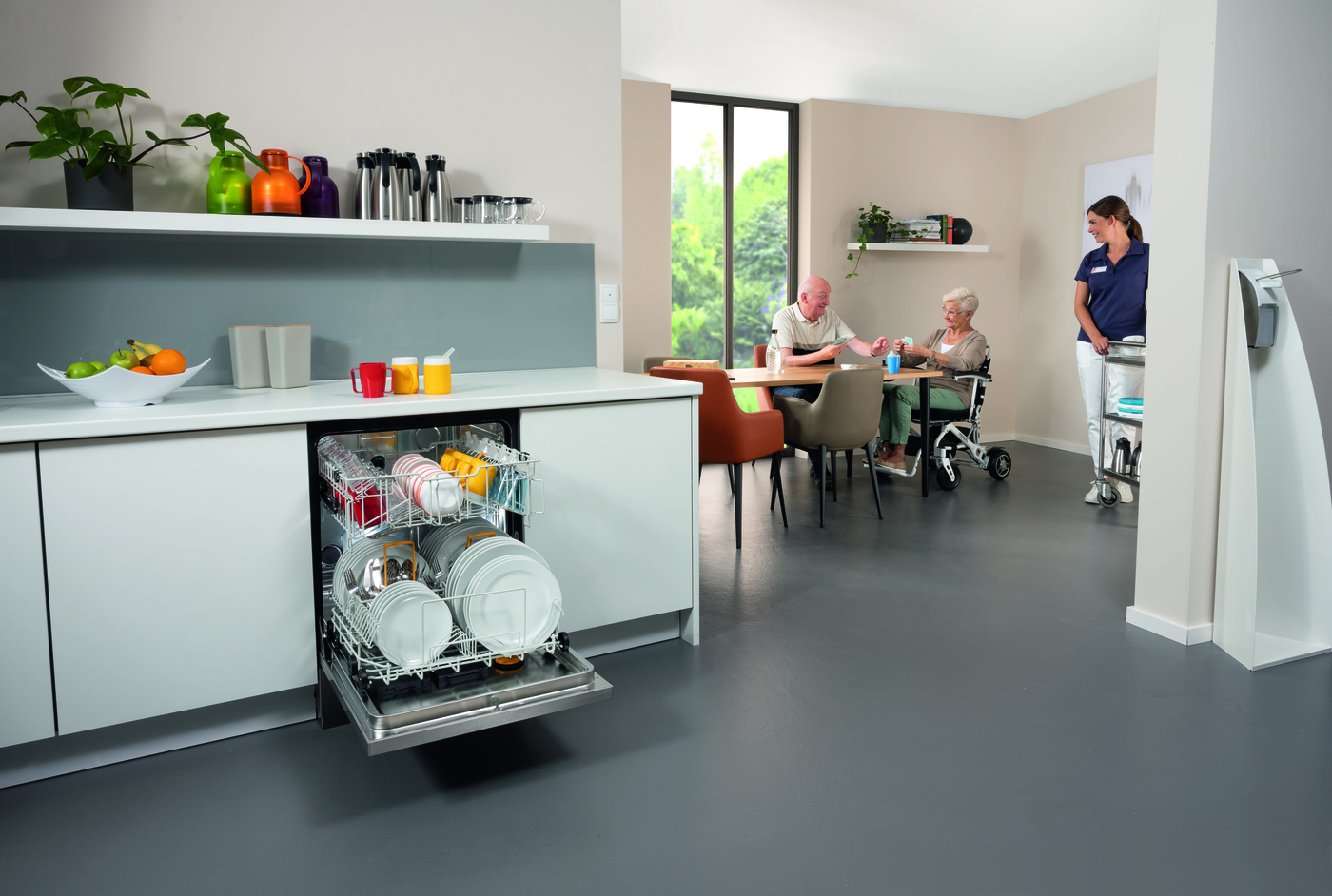
Some models take this even further, using fresh-water systems that replace water during the cycle rather than recirculating it. This provides additional reassurance for kitchens that prioritise dependable hygiene across the day. For example, machines like Miele Professional’s PFD 404 WB Hygiene dishwasher demonstrate how a freshwater approach supports stringent cleanliness requirements while fitting into fast paced environments without fuss. The PFD 404 also reaches a final rinse temperature of 85°C, comfortably meeting the thermal disinfection expectations for care environments.
Supporting the team behind the service
While resident wellbeing is the obvious priority, the people running the kitchen also need tools that ease the demands of their day. Fast cycle times help staff stay ahead of meal service deadlines, and modern commercial dishwashers can complete a load in a matter of minutes. This reduces the need for kitchens to stock large reserves of crockery, since clean items are available again quickly.
The design of the controls can also have a tangible effect on the working day. Simplified interfaces and clear programme selections reduce training needs for newer staff and help experienced team members work with fewer interruptions. Automated dosing of detergents and rinse agents removes another small but repetitive task that otherwise takes time away from more meaningful responsibilities. With staffing pressures common across the sector, these practical features support smoother shifts and reduce unnecessary strain.
Thinking beyond the short term
When assessing equipment, care homes often face the challenge of balancing immediate costs with longer term value. While commercial machines carry a higher upfront price than domestic appliances, they are built for sustained use. This usually leads to fewer service interruptions and avoids the cycle of frequent replacements that domestic models often require when used intensively.
Water and energy use also add up across a full year of operation. Many commercial machines use measured amounts of water per cycle and rely on energy saving components that reduce utility consumption without compromising hygiene performance. This can help care homes manage budgets more effectively, particularly when combined with reliable service networks and long availability of replacement parts.
These details may seem small individually, however together they help maintain a dependable foundation for the kitchen. With the right machine in place, staff spend less time managing equipment issues and more time supporting residents.
A quiet but vital part of care
Dishwashing may not draw much attention in day-to-day care home life, yet it directly supports resident safety, staff wellbeing and the overall consistency of service. Choosing equipment built specifically for heavy use and hygiene critical settings gives kitchens the confidence to handle every mealtime without interruption.
Care homes already carry a great deal of responsibility, so having dependable dishwashing processes in place helps lift some of the everyday pressures. With the right tools, kitchens can work smoothly behind the scenes, ready to support the people who rely on them.
Miele Professional provides dishwashing solutions designed for environments where cleanliness and reliability carry significant weight.
You can read more about their commercial freshwater dishwashers and their benefits here: https://www.miele.co.uk/p/pfd-404-wb-hygiene-12066190-pp

Comments
Login/Register to leave a comment