

Our Board
The Working Age Adult Policy Board exists to give a dedicated, sustained voice to providers supporting working-age adults and to address the distinct challenges this group faces within social care, challenges that are too often overlooked in a policy landscape that tends to focus primarily on older people’s services.
Established under Care England’s broader advocacy framework, the Board brings together senior sector leaders from across residential care, supported living, learning disability, autism and complex care services. It plays a pivotal role in shaping national policy and ensuring that the needs of working-age adults, and the providers who support them, remain a genuine priority at the highest levels of decision-making, not an afterthought to broader social care reform.
The Board provides a platform for meaningful, coordinated change. It operates as a collaborative space for sharing expertise, surfacing sector-wide challenges, and developing impactful, evidence-based policy recommendations that draw on the real operational experience of providers working at the sharp end of the system. Equally important, it ensures that providers delivering services to working-age adults are properly and consistently represented in national and local advocacy efforts.
The Board is designed to generate solutions, working constructively with government, commissioners, regulators and other stakeholders to build a system that is fair, sustainable and capable of delivering genuinely good outcomes for the people it exists to serve.
Our Priorities
1. Poor commissioning practice
Commissioning practices across local authorities and Integrated Care Boards remain one of the most significant and persistent pressures facing providers of working-age adult services. The Board works collaboratively to identify, challenge and address examples of unfair or unsustainable commissioning, including fee-setting processes that bear little relationship to the actual cost of delivering safe, high-quality care, and benchmarking exercises that fail to account adequately for complexity or specialist need. The Board advocates for greater transparency, accountability and national consistency in how commissioning decisions are reached and communicated, and for a commissioning culture built around understanding what good care requires rather than primarily around controlling cost growth.
2. Casey Review
The Independent Commission into Adult Social Care, chaired by Baroness Casey of Blackstock, represents one of the most significant policy opportunities for the sector in a generation. The Board is committed to presenting a united, credible provider voice to the Commission, contributing detailed evidence, operational insight and constructive proposals that reflect the real-world experience of organisations supporting working-age adults. This includes active engagement at both official and political levels, ensuring that the distinct pressures facing this part of the sector are properly understood and reflected in the Commission’s final recommendations.
3. Oliver McGowan Mandatory Training
The implementation of the Oliver McGowan Mandatory Training on Learning Disability and Autism presents both an important opportunity and a significant operational challenge for the sector. The Board is coordinating a sector-wide, solution-focused response — promoting a practical, proportionate approach to implementation that upholds the intent and principles of the training while ensuring it can be delivered effectively at scale, without placing disproportionate burdens on providers or the workforce. The Board has engaged directly with the Care Quality Commission and the Secretary of State for Health and Social Care to ensure providers’ concerns and proposals are heard at the highest levels.
4. Employment Rights Bill (inc. minimum rate for care workers and union recognition)
The Employment Rights Bill introduces a range of significant workforce reforms with direct implications for providers of working-age adult services, including new provisions on minimum pay rates for care workers and union recognition. The Board is analysing and communicating the practical implications of these changes, working to ensure that the sector’s voice is heard in the development of implementation guidance and that outcomes are fair and financially sustainable for providers operating within already constrained commissioning environments.
The Work of the WAA Policy Board
Employment Rights Bill: Trade Union Access Consultation Update
For the second round of the trade union access consultation, Care England submitted a formal response where the Board’s engagement, and the direct advocacy of its members, has had demonstrable impact on the shape of the emerging code. Drawing on the operational expertise and first-hand experience of Board members, Care England’s response helped secure explicit recognition that residential care homes are fundamentally different from standard workplaces, with the draft code now stating that access should take place in staff offices or meeting rooms, that private dwellings are exempt, that arrangements must respect residents’ privacy, and that off-site meetings may be required where suitable on-site space cannot be accommodated, paid for by the unions.
Our Letter to the Casey Commission: Valuing Care and the Case for Reform
In May 2026, Professor Martin Green OBE wrote directly to Baroness Casey setting out detailed evidence on commissioning practices that the Board believes the Commission must examine closely. The letter was prompted by Baroness Casey’s speech at the Nuffield Trust Summit, in which she questioned the practice of Integrated Care Boards commissioning private companies to identify savings within Continuing Healthcare expenditure, with those same companies then receiving a proportion of the savings achieved. Care England’s letter focused in particular on the role of Valuing Care, commissioned by a number of local authorities and ICBs to undertake fee modelling exercises, in several cases on a percentage-of-savings basis, a model that providers argue cannot reliably reflect the actual cost of delivering safe, sustainable care for people with complex needs.
The letter urges the Commission to examine arrangements where third parties benefit financially from reducing care fees, to consider clearer national expectations around external cost modelling, and to look at accountability and transparency in fee-setting processes more broadly. It concludes with an invitation for Baroness Casey and her team to meet directly with Care England members operating across learning disability, autism and complex care services, providers with first-hand experience of how these arrangements are operating on the ground.
Click here to read Care England’s letter to the Casey Commission.
Our Letter to the Casey Commission: Working Age Adults and the Broader Reform Agenda
Members of the Working Age Adult Policy Board have engaged directly with the Casey Commission, including through meetings with members of Baroness Casey’s team, to ensure that the distinct pressures facing providers of working-age adult services are properly understood and reflected in the Commission’s emerging thinking. That engagement has been reinforced by a formal submission presenting the united voice of Care England members on the reforms needed to place working-age adult services on a sustainable footing.
The submission addresses poor commissioning practice, the funding gap, workforce challenges and the need for greater national consistency in how services for working-age adults are planned, commissioned and resourced, making the case that these issues must be treated as priorities within the Commission’s final recommendations, not as secondary considerations to the broader social care agenda.
Click here to read the letter to the Casey Commission from the Working Age Adult Policy Board.
Oliver McGowan Mandatory Training: Our Response
Care England’s Working Age Adult Policy Board is coordinating sector-wide engagement on the implementation of the Oliver McGowan Mandatory Training on Learning Disability and Autism. Building on detailed feedback from members, the Board has written formally to both the Care Quality Commission and the Secretary of State for Health and Social Care, setting out providers’ shared concerns and proposing practical solutions that support the intent of the training while ensuring it can be implemented effectively across a diverse provider landscape. The letters call for consistent national inspection expectations, recognition of equivalent or legacy training, proportionate timelines, and co-design of a delivery framework that can operate at scale without compromising quality.
A shared appendix, developed by the Board and accompanying both letters, sets out specific proposed clarifications to the Code of Practice, covering tier definitions, evidence of equivalence for existing training, remuneration and safeguarding for lived-experience trainers, and practical considerations for large-scale delivery. Together, these documents reflect the Board’s commitment to constructive, evidence-based engagement: supporting the principles that underpin the training while insisting that implementation is practical, ethical and sustainable.
Click here to read the letter to the CQC.
Click here to read the letter to the Government.
Click here to read the shared appendix.
The Board also produced an impact assessment to understand the real costs of implementation for providers, the findings of which informed a dedicated meeting with the DHSC to discuss the sector’s concerns directly, and agree a sustainable way forward.
You can view the impact assessment here.
MEMBERS of the board

Tim Davies
Chair of the Board | Chief Executive of ivolve Care
Tim joined ivolve Group in August 2021 as Chief Executive Officer having had over 25years’ experience leading large organisations across the healthcare sector. He also currently chairs Care England’s Working Age Adult Policy Board. ivolve Care & Support is a large provider of residential and supported living services for people with autism, mental health conditions and learning disabilities operating across England and Wales. ivolve supports approximately 1200 people across 200 different locations. The organisation employs 4,500 people.

Zak Houlahan
Board Member | Chief Executive of Achieve Together
Zak Houlahan joined Achieve together as CEO in May 2024, bringing with him over 20 years of senior management experience and a proven track record of driving operational excellence across a range of sectors including Aviation, Environmental Services, Transport Infrastructure and Renewable Energy Infrastructure. Guided by his core belief that every human being is born with equal value, Zak has focused on transforming Achieve together by placing our homes at the heart of everything we do and championing the voices of the people we support.

Peter Kinsey
Board Member | Chair of Iris Care Group
Peter is Iris Care Group’s Chairman and has over 35 years of health and social care experience, working across the sector. Most recently he was CEO of the Care Management Group/Achieve Together, and has previously worked as a Director of Mental Health Services in the NHS and as a local authority Strategic Commissioning Manager. He has also chaired Care England’s Learning Disability Group and been on the board of Learning Disability England.

Rebekah Cresswell
Board Member | Chief Executive of Priory
Rebekah has over 30 years’ experience in health and social care and is a nurse by background. She joined Priory in November 2012 working as director of quality in Priory Healthcare for 4 years. She moved to the group-wide role of director of performance and regulation in January 2017 to drive improvement and lead on regulation interfacing with the seven regulators across healthcare, education and adult social care. In March 2018, she moved to Priory Adult Care full time as Chief Operating Officer, and then appointed as CEO of Priory on 1 November 2021, overseeing Priory’s business and operations in the UK across its Healthcare and Adult Care divisions.

Mike McKessar
Board Member | Chief Executive of Voyage Care
Mike McKessar is Chief Executive Officer at Voyage Care, the leading provider of specialist care and support to working adults with learning disabilities, autism, brain injuries and other complex needs. Mike is an experienced and highly regarded leader in the social care sector having previously been Chief Commercial Officer at HC-One. Prior to this he was Commercial Director at Sunrise Senior Living and spent nine years at Bupa in various roles, including leading Bupa’s medical travel insurance business in Copenhagen and as Strategy Director for the global division. Mike holds a Masters of Public Administration from Columbia University and London School of Economics.

James Allen
Board Member | Chief Executive of National Care Group
James began his career in local government and NHS roles, where he led social care transformation initiatives. He has worked in his current role since 2019, leading a team of 2,400 staff delivering planned care and support to more than 1,250 adults with complex needs, enabling them to achieve full potential and live independently within the community. James was invited to join the Care England board as a trustee in 2021 and contributes to shaping the future of social care and championing collaborative partnerships with stakeholders.
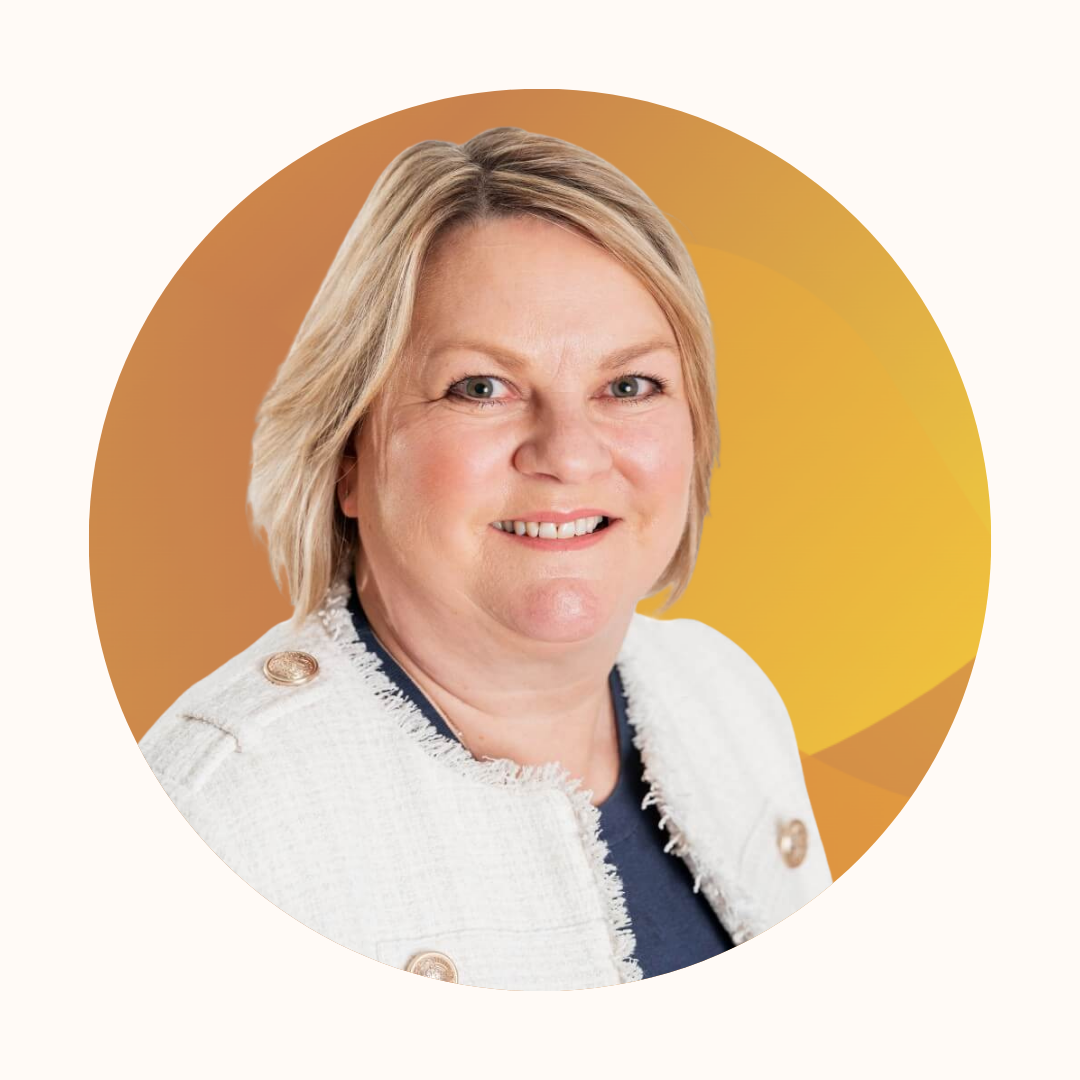
Andrea Kinkade
Board Member | Chief Executive of Lifeways
Andrea is an experienced and driven Chief Executive with a strong track record in leading business growth and transforming operational performance within the healthcare sector. Andrea has spent the last decade working in health and social care, having previously occupied roles at Independence Homes Ltd, where she was a Managing Director, and Active Care Group as CEO. More recently Andrea has held the position of Co-Founder and CEO at Innovate Care Group, a complex care services provider. Across these positions Andrea has developed considerable skills and expertise in a range of areas including procurement, marketing, care operations and retail. Andrea applies a particular emphasis on people management recognising the need for employee engagement and support in order to create effective teams and offer the highest standards of care.

Dr Ruth Owen OBE
Board Member | Chief Executive of Leonard Cheshire
Ruth became CEO for Leonard Cheshire in 2021. A wheelchair user from the age of seven, Ruth believes passionately in the importance of independent mobility in a disabled person’s life and in removing the barriers disabled people face. Prior to Leonard Cheshire, Ruth spent 17 years as CEO of Whizz-Kidz, a national children’s disability charity providing mobility equipment. Under Ruth’s leadership, the charity became the biggest provider of powered and lightweight manual wheelchairs for disabled children and young people outside of the NHS and a leading campaigning organisation. Ruth sits on the CQC’s board.

Valerie Michie
Board Member | Chief Executive of Choice Care Group
I was pleased to join Choice as CEO in 2020. There has never been a better time to recognise the skills of our colleagues in providing services that enable people to have great lives. I am proud to support the ongoing development of our services as we continue to learn from the people we support, our colleagues, and the communities we work in. I have over twenty years’ experience in people driven businesses and I am Chair and Trustee of The Listening Place, a charity that provides face-to-face support for those who feel life is no longer worth living.
Have a Question for the WAA Policy Board?
Have a Question for the Working Age Adult Policy Board?
We welcome your feedback, ideas and suggestions. Whether it's about our current priorities, the work we have done so far, or areas you think we should explore next, we want this board to represent your views and focus on what matters most to you
Have a Question for the Working Age Adult Policy Board?
We welcome your feedback, ideas and suggestions. Whether it's about our current priorities, the work we have done so far, or areas you think we should explore next, we want this board to represent your views and focus on what matters most to you