



The most advertised role across social care is Caregiver, with a salary range of £25,604 to £30,160, and it is also where competition for experienced staff is most intense. With Support Workers, Home Care Staff, Senior Care Staff, and Waking Night Support Workers rounding out the top five most sought-after roles, the sector is in a constant battle to attract people with specific care experience. But this approach may be narrowing the talent pool far more than necessary.
A fundamental shift is underway in how forward-thinking employers think about hiring: the move from experience-based recruitment to competency-based recruitment. Rather than asking only whether a candidate has done this before, the better question is whether they have the qualities to become excellent at it. The difference matters enormously in a sector where demand consistently outpaces supply of experienced workers. Social care currently sits among the lower-paying industries nationally, with a median salary of £28,870, meaning it cannot simply outbid adjacent sectors to attract experienced talent.
The skills that make a great care worker, including resilience, empathy, emotional intelligence, the ability to stay calm under pressure, and leadership in difficult moments, are not exclusive to people who have worked in care before. They exist across the working population: in retail workers who have managed distressed customers, in hospitality professionals from high-pressure environments, in parents and community volunteers who have provided informal care. Nationally, employers across all sectors are already signalling the shift, with leadership, technical expertise, and interpersonal skills identified as the fastest-growing areas of hiring focus in 2026.
Tech readiness is the second dimension of this skills shift. As the care sector digitises, from electronic care plans and medication management systems to remote monitoring tools, identifying candidates with technical adaptability becomes as valuable as any specific care qualification. A candidate who is comfortable learning new digital tools will add long-term value in a way that care experience alone cannot guarantee. AI and automation skills are among the fastest-growing premiums employers are paying for nationally in 2026, and the care sector’s digitisation trajectory means this premium will reach frontline roles sooner than many organisations currently anticipate.
The practical implication is a two-step hiring model: interview for potential, then train for specific care skills. Structured interviews that explore scenarios requiring empathy, resilience, and problem-solving can surface exceptional candidates who would be filtered out by a purely credentials-based process. This approach transforms the available talent pool and builds loyalty from day one.
Expanding the talent pool and recognising transferable skills could transform the way social care recruits and develops its workforce.
Join our webinar
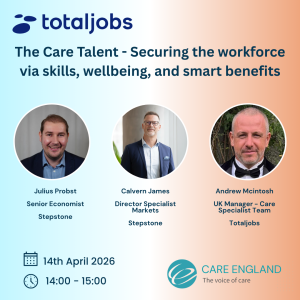 In our upcoming webinar “The Care Talent: Securing the Workforce via Skills, Wellbeing and Smart Benefit,” we’ll explore how providers can unlock hidden talent, build skills for the future and rethink recruitment strategies in a sector where demand continues to grow.


Comments
Login/Register to leave a comment