



The social care sector operates at a structural disadvantage when it comes to talent. With a median salary of £28,870, which is £4,000 below the UK national median of £33,526 and approximately £20,000 below the median in the highest-paying sector, Technology, at £48,595, it cannot outbid other industries on pay alone. The workforce is split almost evenly between confident job switchers, the 41% who are actively looking or planning to look for a new role in 2026, and risk-averse stayers who need reassurance before they will consider change. The route to winning in this environment is not to compete on the terms you cannot win. It is to excel on the terms others are ignoring.
That is the premise of the Triple Lock strategy: three interlocking commitments that, taken together, stabilise the existing workforce, attract passive candidates, and future-proof the organisation against the skills challenges ahead.
Lock 1 | Stabilise: Financial and mental wellbeing
The foundation of retention is addressing the basic anxieties that cause people to leave. Implement virtual GP access, sick pay above the statutory minimum, and mental health support as standard, not as perks. These measures directly target the sector’s number one worker priority: reducing stress, cited by 41% of social care professionals as their top career goal for 2026, above earning more money. Organisations that get this right will see reduced absenteeism, lower turnover, and a more stable, committed workforce. The current benefit satisfaction rate of 65% in social care represents significant headroom for employers willing to act.
Lock 2 | Attract: Flexibility and transparency
The passive candidate, someone who is not actively job hunting but would consider the right opportunity, is the most valuable and most overlooked target in care recruitment. Attracting them requires advertising what they want: flexible working, clear career progression, and visible salary information. Flexible working is desired by 46% of social care candidates but appears in only 6% of job ads. Salary information is included in 70% of care postings, above the national average, but 30% of roles remain opaque to the 80% of candidates who filter out non-transparent listings. Closing these gaps in job advertising is the fastest, lowest-cost way to increase application volume and quality.
Lock 3 | Future-proof: Resilience and tech-readiness
Hiring for potential rather than history is the third and most strategic lock. As the sector digitises and demand for care continues to grow, organisations that can identify and develop talent from adjacent industries will have a decisive advantage. Prioritising resilience, emotional intelligence, and technical adaptability, alongside building training pathways for sector-specific skills, creates a talent pipeline that is not dependent on an increasingly scarce pool of experienced care workers. With social care salaries for specialist management roles such as Residential Care Manager reaching £43,535 to £65,000 and Social Care Officer reaching £36,330 to £70,000, there is a genuine and visible career ladder to offer candidates who enter the sector through non-traditional routes.
Together, these three commitments form a coherent strategy for organisations that are serious about solving the care talent challenge for the long term. In a sector where the basics are so often overlooked, doing them consistently and well is enough to stand out.
The workforce challenge in social care requires a strategic response that combines retention, recruitment and future skills development.
Join our webinar
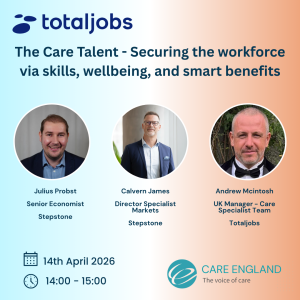 In our upcoming webinar “The Care Talent: Securing the Workforce via Skills, Wellbeing and Smart Benefit,” we’ll explore how providers can unlock hidden talent, build skills for the future and rethink recruitment strategies in a sector where demand continues to grow.


Comments
Login/Register to leave a comment