



One of the most persistent and costly problems in social care hiring is the gap between what candidates genuinely want from a job and what employers are advertising. Understanding and closing this gap is not a matter of increasing budgets. It is a matter of paying attention to the data and acting on it.
The flexibility gap is the starkest example. Flexible working hours are the single most desired benefit among social care candidates, cited by 46% of respondents. Yet flexible working appears in only 6% of social care job advertisements. This is a near total disconnect. Nationally, flexible hours top the wish list for 41% of all workers, but only 4% of all employers mention it in job ads. Social care’s flexibility gap is even wider. Organisations are competing fiercely for the same experienced staff while failing to mention the benefit candidates want most.
The career progression gap is equally damaging. More than half of candidates (53%) say a visible lack of career progression is a reason they would choose not to apply for a role. The sector already struggles with a perception problem around status and opportunity. When job descriptions fail to map out any pathway from a frontline caregiver role to something more senior, they actively discourage the very candidates who would grow with the organisation. The most advertised in-demand roles span a wide range, from Caregiver at £25,604 to £30,160, through Senior Care Staff at £27,393 to £30,451, and up to Residential Care Manager at £43,535 to £65,000, yet this progression ladder rarely appears in individual job ads.
Salary transparency adds another layer. A compelling 80% of candidates say they actively avoid roles that do not disclose pay. Social care is ahead of the national average here, with 70% of care job ads including salary information, but that still leaves nearly a third of the market hidden and invisible to the majority of serious job seekers.
The actionable strategy is straightforward: rewrite job descriptions to do three things explicitly. First, name and describe flexible working options. Second, map career pathways, from Caregiver, through Senior Care roles, to Management, so candidates can see where a role leads. Third, always include a salary range. These changes cost nothing and address the three biggest reasons candidates are self-selecting out before they even apply.
Understanding what candidates want is only the first step. The real opportunity lies in translating that insight into practical recruitment strategies that attract the right people and reduce missed opportunities.
Join our webinar
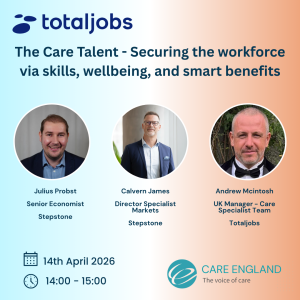 In our upcoming webinar “The Care Talent: Securing the Workforce via Skills, Wellbeing and Smart Benefit,” we’ll explore how providers can close the gap between candidate expectations and employer practice to improve recruitment outcomes across the sector.


Comments
Login/Register to leave a comment