



The social care sector faces a crisis that goes beyond recruitment numbers. Even as wages have risen, boosted by minimum wage increases and public sector pay growth, a striking 32% of social care workers are still cutting back on essential spending. Pay rises alone are not translating into financial security, and the sector is feeling the pressure. Social care’s median advertised salary of £28,870 represents just 6% growth on the previous year, below the 7.5% national median increase, and the financial squeeze on frontline workers remains acute.
What makes this situation particularly unique is what workers say they actually want. Unlike virtually every other industry, the number one career goal for social care professionals is not a pay rise. It is reducing stress, cited by 41% of workers as their primary ambition, placing it above financial advancement. This is a critical signal that employers cannot afford to ignore.
The implications are clear: the traditional model of competing purely on salary is a losing strategy in social care. Workers are exhausted, financially stretched, and emotionally drained. The sector records among the lowest salary satisfaction rates in the UK at 67%, and benefit satisfaction at 65% sits equally near the bottom across all 22 industries tracked. Yet the tools to address this do not require enormous budgets.
Three high-impact, relatively low-cost interventions stand out as immediate priorities.
Priority 1: Virtual GP access removes one of the most common stressors for shift workers, the inability to book a daytime appointment, and signals that an employer takes health seriously. It is among the fastest-rising benefits in employer adoption nationally, yet it remains rare in care job advertisements.
Priority 2: Sick pay above the statutory minimum addresses financial anxiety directly, reducing the pressure workers feel to come in when unwell, which in turn drives down burnout and long-term absenteeism. Nationally, 28% of candidates across all industries cite enhanced sick pay as a desired benefit, but only 1% of job ads offer it. In social care, the gap is similarly stark.
Priority 3: Mental health support must be repositioned. Currently desired by 20% of candidates across the UK workforce, it remains treated as an optional perk in most care organisations. It is also one of the five benefits rising fastest in both worker demand and employer adoption nationally.
Moving mental health support to a core, standard offering alongside GP access and enhanced sick pay sends a powerful message about workplace culture. In a sector where reducing stress is the top ambition, making mental health support a baseline expectation is not just compassionate. It is a competitive differentiator.
Join our webinar
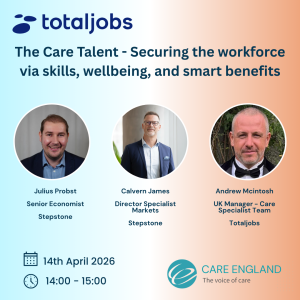 If these challenges resonate with your organisation, join us for our upcoming webinar “The Care Talent: Securing the Workforce via Skills, Wellbeing and Smart Benefit.”
In this session we will unpack the latest workforce data, explore practical approaches to supporting staff wellbeing, and discuss how benefits, culture and leadership can help care providers reduce stress, improve retention and strengthen workforce stability.


Comments
Login/Register to leave a comment