

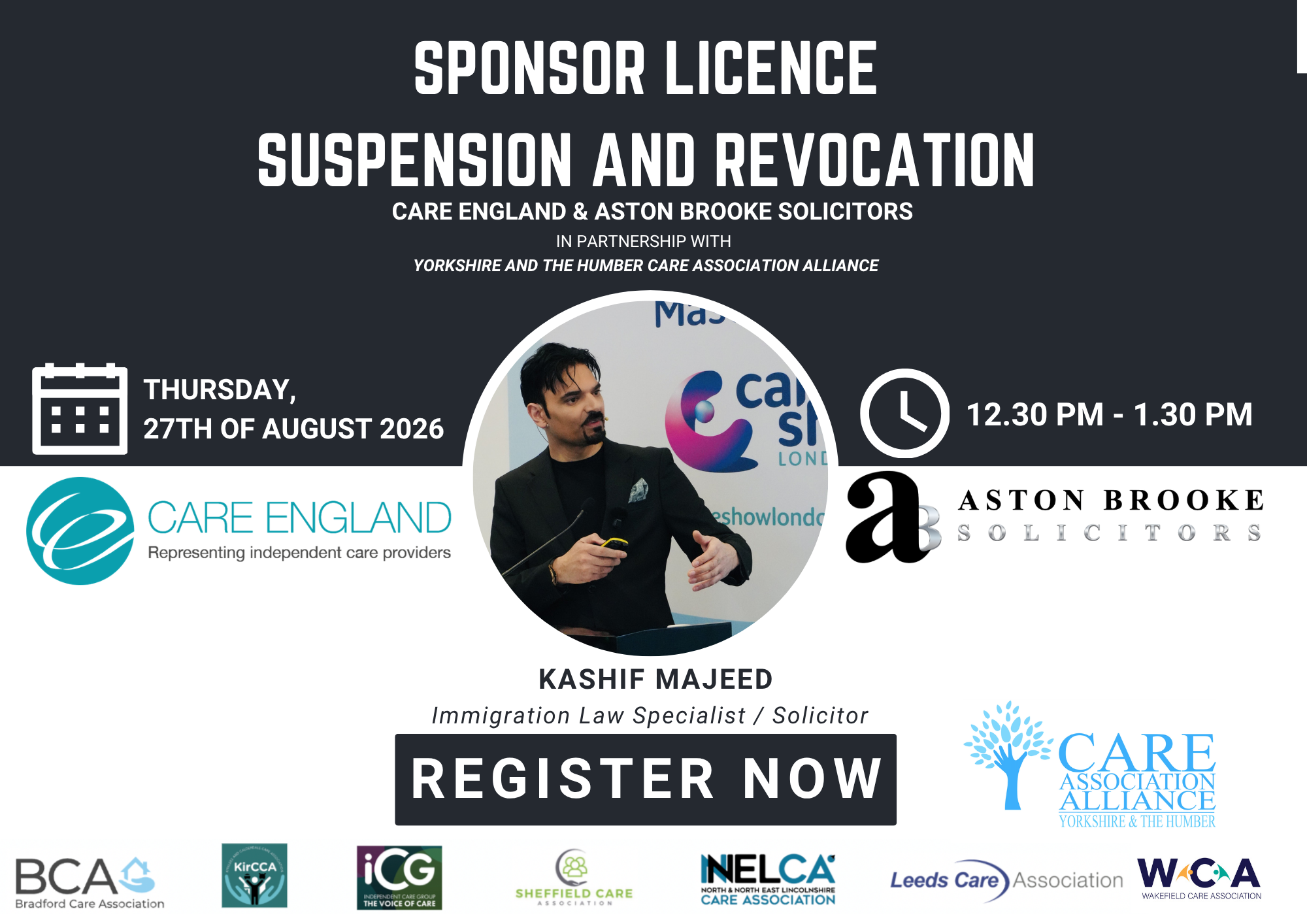
A recording of the webinar can reviewed below, and a copy of the slides can be found HERE.
A sponsor licence suspension can stop an organisation assigning new Certificates of Sponsorship and may be the start of a high-stakes enforcement process. The webinar explored the warning signs, the difference between suspension and revocation, and how to organise a timely, evidence-led response.
Sponsor licence suspension and revocation can have immediate consequences for recruitment, workforce planning, reputation and continuity of care. Concerns may emerge during a compliance visit, through desktop checks or when UKVI compares information held on the Sponsorship Management System with payroll and other business records.
Kashif Majeed, Director at Aston Brooke Solicitors and lead for Sponsorship & Home Office Compliance, delivered a focused session on the practical steps care providers should take before and after Home Office enforcement action. The webinar explained how to recognise risk, respond to allegations and protect both the organisation and its sponsored workforce.
In this webinar, we covered:
- The difference between sponsor licence suspension and revocation, and what each can mean in practice.
- Common triggers for enforcement, including underpayment, role or hours that do not match the CoS, weak genuine-vacancy evidence, missed reporting duties, inadequate records and ineffective right-to-work or attendance controls.
- How data held by UKVI, HMRC, payroll, rotas and HR systems may be compared.
- What happens during a suspension, including restrictions on assigning new Certificates of Sponsorship and the need to respond within the deadline stated in the notice.
- How to build a clear response: allegation-by-allegation analysis, evidence preservation, record reconciliation, witness input, remedial action and senior oversight.
- The operational and workforce consequences of revocation, including the potential impact on sponsored workers.
- Managing time-sensitive CoS allocation and visa-expiry scenarios without compromising compliance.
- The role of Section 3C leave where a valid, in-time application has been submitted, and why employers must still maintain evidence and complete follow-up right-to-work checks.
- Practical controls that reduce the risk of enforcement before concerns arise.
Who should attend?
The webinar was aimed at Authorising Officers, Key Contacts, Level 1 and Level 2 Users, directors, owners, HR and compliance professionals, payroll leads, registered managers and senior operational leaders responsible for sponsored staff and business continuity.
Why attend?
The session highlighted that enforcement correspondence demands a coordinated response, rather than a last-minute collection of documents. It helped leaders understand the decisions that matter, organise evidence across departments and avoid common mistakes that can weaken an organisation’s position. It also demonstrated how stronger everyday controls can help prevent a concern from escalating.
Should you wish to discuss any of the points raised or have further questions, please contact:
- Kashif Majeed – Director, Aston Brooke Solicitors: support@astonbrooke.co.uk
Previous Webinar: UKVI Mock Audits
If you missed our previous webinar on Tuesday 11th August, UKVI Mock Audits: Prepare for a Home Office Inspection and Protect Your Sponsor Licence, you can now watch the recording and access a copy of the slides, here.
The session covered how to prepare for an announced or unannounced Home Office compliance visit, what UKVI may examine and how a mock audit can help identify weaknesses before they put your sponsor licence at risk.

Comments
Login/Register to leave a comment